Thursday, 26 September 2013

Pimple Treatment


You went to bed with clear and glowing skin, but when you awaken, you find a huge, monster zit ready to take over your face! Hurry, get theaspirin! No, not to soothe the headache you're getting from imagining how people will react when they see this mountain on your face. Aspirin is an anti-inflammatory, so you can put it right on the pimple to reduce redness and swelling.[1] Here's how.


Place an aspirin tablet (or as many as necessary) in water and stir or shake. You'll need about 2-3 parts water to 1 part aspirin. There is no need to pre-crush the aspirin. It will naturally dissolve when immersed in water. (Contrary to popular belief, you can use coated or uncoated aspirin without adverse effects.)


Mix the crushed aspirin with enough water to make a thick, somewhat gritty paste. It shouldn't take more than a few drops.


Apply the paste directly on the pimple(s). Make sure to use a clean Q-tip, or, if you prefer to use a finger, wash it thoroughly with soap and / or rubbing alcohol first to ensure that you don't add new bacteria to your skin.


Let the aspirin sit on the spot(s) as long as you can. Usually, the paste will dry in less than a half hour and begin to flake off. Use a clean, wet tissue to remove the aspirin in as few wipes as possible. This can also be an opportunity for light exfoliation.


Tips


  • Wash your hands, before AND after working with acne on your face. The bacteria can make zits get bigger and eventually makes more zits develop on your face!
  • The active ingredient in aspirin, acetylsalicylic acid, is very similar to (though not the same as) salicylic acid, which is used in anti-acne treatments.
  • Clean your face before applying the paste.
  • An alternative is to make a mask instead of a spot treatment. This involves crushing several aspirin tablets, mixing with water and sometimes other ingredients (like honey) and spreading the mixture on your entire face.
  • Uncoated aspirin is easier to crush.
  • Have patience with your skin problems. Although they may not disappear over night, It usually gets worse before it gets better, so DON'T give up!


source: http// akusehatku.blogspot.com
wikihow.com

Sunday, 15 September 2013

Traumatized Child by an event


Children who have experienced an initial traumatic event before they turn 11 years of age are three times more likely to develop psychological symptoms than children who experience their first trauma as a teenager or as an adult later on.[1]
While a traumatic experience can damage a child if left unspoken about and untreated, the good news is that children are better able to cope with a traumatic event if they receive support from parents and other trusted adults they rely upon such as family members, friends, teachers and so forth.
Helping a child through a traumatic experience is important for building a child's resilience (ability to cope), so that they learn how to face what has happened, grieve over it, then put their life back together again and move forward.
Help for children who have experienced a traumatic event should commence as soon as possible after the event has occurred. As such, it is important to identify signs of trauma in a child as well as to presume nothing from their silence but to seek to ensure that they are both reassured and supported.


identify steps

Be aware of what can be considered a traumatic experience for a child. A traumatic experience is one that terrifies or shocks the child and may have felt life-threatening (whether real or perceived) and caused the child to feel extremely vulnerable.

The types of events that might trigger a traumatized response in a child include anatural disaster, a vehicle accident, other types of accidents, childhood neglect, abuse (verbal, physical, emotional or sexual), rape, war, and violent bullying or victimization.[2]

A parent suffering from post-traumatic stress disorder can also be a trigger for a child to develop a traumatized response; in fact, a child may even react more strongly to trauma because adults around them have done so, especially parents because they're so attuned to them.[3]

Start by assessing physical symptoms. A child who has experienced a traumatic event may show the following physical signs:

  • Become easily upset, crying and whining;
  • Revert to younger behavior such as bed wetting and thumb sucking;
  • Misbehavior;
  • Have symptoms of illness, such as headaches, vomiting or fever.


Look for any of the following psychological signs in a child. A traumatized child may exhibit any or all of these behaviors after a disaster:
  • Be upset over the loss of a favorite toy, blanket, teddy bear or other times that adults might consider insignificant, but which are important to the child;


  • Change from being quiet, obedient and caring to loud, noisy and aggressive or may change from being outgoing to shy and afraid;
  • Develop nighttime fears. They may be afraid to sleep alone at night, with the light off, to sleep in their own room, or have nightmares, night terrors or bad dreams;

  • Be afraid the event will reoccur;
  • Lose trust in adults. After all, their adults were not able to control the disaster, so they reason "who can?" and decide that nobody can;
  • Not want parents out of their sight and refuse to go to school or childcare;
  • Feel guilty or ashamed that they caused the disaster because of something they had said or done;
  • Feel alienated from other children;


  • Become afraid of wind, rain or sudden loud noises;
  • Worry about where they and their family will live or survive;
  • The child may talk about or exhibit signs of interest in suicide;
  • A psychologist or psychiatrist might see signs of anxiety, depression or fearlessness in the child.


Be aware that even if a child does not display any or a few of these symptoms that that doesn't mean they're coping. A child can be impacted by a traumatic event but keep it bottled up inside out of a misguided need to be strong for mom or courageous for dad, etc.


Assume that a child who has been part of a traumatic event needs to be cared for with extra attention to helping them through the event.


Seek help as soon as possible. The responses, reactions and abilities of those immediately responsible for a child influence the child's ability to cope with a traumatic occurrence.


While you can and should talk to your child about their feelings and make it clear that you're available to talk at any time, it can be much more helpful to have professional help assist you.


The types of therapy likely to assist recovery for your child includepsychotherapy, psychoanalysis, cognitive-behavioral therapy, hypnotherapy and eye movement desensitization and reprocessing (EMDR).


  • Don't try to cope alone. While it is only natural for you to want to try and be the support for your child, going it alone will make it harder on you, especially if you have also experienced the traumatic event.

By allowing others to help your child, you are not reneging on your responsibility for caring for your child; rather, you are broadening the opportunities for your child to recover through help from various people, including yourself and your other family members.


  • You can help a great deal by seeking to restore a routine as soon as possible, continuing to feed your child a nutritious diet and helping your child maintain play andexercise schedules that ensure connections with others of their own age and body movement for good health.
  • Be available for your children and try to stay focused about what matters in the nowin their presence, rather than ruminating on the past event.

cikepal.blogspot.com
Wikihow.com

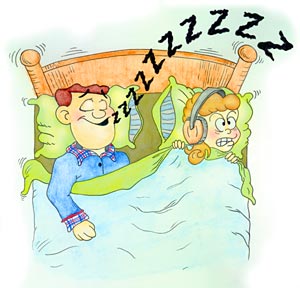
Sleep Disorders_Snoring


If you're a snorer, you're probably the only person in your household getting enough sleep at night. Try the following preventative measures for curing your snoring problem. You'll help yourself and bring peace to your home.

TIPS
Avoid things that make snoring worse: alcohol, sleeping pills, coffee, and rich foods before bedtime.[1]

If you regularly take any kind of medication, talk to your doctor about alternatives. The drugs you're ingesting might be making your snoring worse.

Alcohol, sleeping pills, and other sedatives make your throat muscles relax and narrow your airway. Large meals and rich food restricts your airway by pushing up on your diaphragm. [2]

Address any nasal congestion.
  • Try taking a decongestant or antihistamine if nasal congestion is causing your snoring. Use these only as a temporary measure if you suspect that a cold or allergy is to blame. Prolonged use of either can be harmful.

Gargle with a peppermint mouthwash to shrink the lining of your nose and throat. This is especially effective if your snoring is a temporary condition caused by a head cold or an allergy.


Change your sheets and pillowcases often to relieve nasal stuffiness, alleviate bedroom allergens. Try to vacuum your floors and wash your curtains often too.


Tape your nose open with nasal strips. These are available at most pharmacies. They may look odd, but who's looking? Following the directions on the package and tape one of the strips to the outside of your nose. They work by lifting and opening your nostrils to increase airflow.


Do exercises to firm the tissue associated with your snoring.
  • Stick your tongue out as far as you can, then relax. Repeat 10 times.
Stick your tongue out again, and try to touch your chin. Hold. Repeat with trying to touch your nose. Repeat 10 times.


Smile as wide as you possible can, hold for 10 seconds, then relax. Repeat this as many times as you can throughout the day.


Sing La-La-La-La as loud as you can. Hold each La for 3 seconds. Repeat 5 times. Then, repeat singing Ka-Ka-Ka-Ka. Follow that with Ma-Ma-Ma-Ma. This will strengthen your throat so that it does not relax (and thus block air) when you sleep.


Close your mouth and perform a chewing motion. Make sure molars on both sides move apart, then touch again. Make an "mmmmm" sound as you do this for added affect. Continue for 1 minute. [3]

If you sleep on your back, buy yourself a few extra pillows and prop yourself up in bed, rather than lying flat on your back. Also, raise the head of your bed. An easy way to do this is to place several flat boards under the legs at the top end of the bed. A couple of old phone books under each leg should also raise the bed enough to do the trick.


Sleep on your side. There's a good reason you don't want to sleep on your back: in that position, your tongue and soft palate rest against the back of your throat, blocking the airway. One way people train themselves to stay on their side is by taping or sewing atennis ball to the back of their shirt, so whenever you roll onto your back, it's very uncomfortable.

Try mouthpiece devices. Also known as dental appliances or mandibular advancement splints, these are usually small plastic devices worn in the mouth during sleep to prevent the soft throat tissues from collapsing and obstructing the airway. They do this by bringing your lower jaw forward and/or by lifting your soft palate. Some devices also stop the tongue from falling back over your windpipe.

Source: wikiHow.com


Monday, 9 September 2013

Get White teeth


White teeth are a sign of health and good self-care and they're essential for a lovely smile. If your teeth aren't as white as you'd like them to be, there are some things you can do to get whiter teeth at home. While none of these suggestions will work in the same way as a professional whitening service, they can help whiten your teeth and won't cost a fortune. Just remember to talk to your dentist before you try any at-home remedies to make sure they won't damage your teeth. If you want to know how to make some lifestyle changes as well as to try some at-home treatments for whitening your teeth, just follow these steps.


steps 


Find the appropriate whitening strips. They should be approved by the American Dental Association (ADA) and shouldn't contain chlorine dioxide, which can actually damage your enamel. Whitening strips should be made of polyethylene and you can find them at your local drugstore or even a supermarket.


Thoroughly brush and floss your teeth. This will help remove any build-up that will prevent your teeth from being whitened. Flossing your teeth will remove plaque in between your teeth and will ensure that this area is whitened as well.


Study the instructions. Each package of whitening gel is slightly different, so check out the instructions to see how to apply the strips, how long to leave them on, and how often they should be used. Most strips are used for about half an hour twice daily. Some have to be thrown out after they're used while others will simply dissolve in your mouth.


Apply the strips over your teeth. Apply the strips firmly over your teeth, running your fingers over the strips to help the gel stick to your teeth. Avoid moving your tongue too much or you'll get gel all over your mouth. This won't be harmful, but it can feel a little unpleasant. Leave the strips on your teeth for the given amount of time on the instructions.


Remove the strips. After the right amount of time passed, gently remove the strips from your teeth and throw them out. If they dissolve, you can skip this step.


Rinse your mouth. Rinse it thoroughly until you have removed the remaining gel from your mouth. Continue using the whitening strips for the amount of time that is recommended in the instructions, and wait to see the results.


2

Use whitening gel. Find an ADA-approved gel to use on your teeth and read the instructions to understand the process of using a whitening gel. Then, brush the gel onto your teeth with a small brush, just as you normally would -- for at least two minutes. Then, spit out the remaining gel and rinse out your mouth until the gel is gone.


Use whitening toothpaste. Make sure the toothpaste is ADA approved before you purchase it. ADA-approved whitening toothpastes whiten your teeth by gently removing their surface stains through polishing, chemical chelation, or other processes that do not require bleach. You can find many of these toothpastes over the counter. [1]


Use hydrogen peroxide. Commercial whitening kits aren't cheap; for a cheaper solution, you might like to consider whitening your teeth at home using hydrogen peroxide for a similar effect. Bleaching teeth with hydrogen peroxide is acknowledged as a safe practice by the American Dental Association.


Purchase a bottle of hydrogen peroxide from your local drug store. Hydrogen peroxide is commonly used to treat skin wounds, but its antiseptic properties are also good for oral hygiene. Hydrogen peroxide is typically packaged in a brown bottle. The opaque packaging keeps light from altering the makeup of the solution. Buy a 3% solution, which is safe for oral use.


Use a mixture of the hydrogen peroxide and water as a mouthwash. Use it daily before you brush your teeth to whiten your teeth naturally. Make sure to mix it in a 50/50 solution with water. Here's how you should do it:

  • Pour about 2 tablespoons (30 milliliters) of the antiseptic into your mouth, and swish it around for 1 minute. The solution will begin to foam; this is how you know it is working. The hydrogen peroxide combined with oral bacteria cause bubbles to form in your mouth.
  • Spit out the solution, and rinse your mouth with water.
  • Brush your teeth as you normally would.


Brush your teeth with a hydrogen peroxide and baking soda paste once a week. This mixture will help keep your teeth looking white and clean. Here's how you can make it:


  • Pour 2 teaspoons (10 milliliters) of hydrogen peroxide into 3 teaspoons (15 milliliters) of baking soda. Mix these together until a paste forms. Play with these measurements until you find a consistency that you like. The paste should be similar in thickness to toothpaste.
  • Add a tiny bit of mint toothpaste to your homemade paste to give it a fresh flavor. You can also add a drop of peppermint extract.
  • Mix in a dash of salt. The salt will exfoliate your teeth as you brush. However, salt is quite abrasive, so don't use it too often.
  • Dollop the paste mixture onto your toothbrush.
  • Brush the paste onto your teeth in small, circular motions. Once all teeth are covered, let the mixture sit on your teeth for 2 minutes.
  • Rinse the solution off your teeth by swishing with water from the bathroom sink.
  • Brush your teeth with toothpaste to rid your mouth of any remnants of the hydrogen peroxide mixture.


3

Wet your toothbrush and dip it into baking soda. All of the bristles should be covered with water so that your toothbrush bristles are white.


Brush your teeth for 2 minutes. Spit if necessary.


Spit out the baking soda. Rinse your mouth clean with water (you don't want baking soda in your mouth for a long period of time). Using mouthwash after can help to remove the bad taste of the baking soda if it is unbearable. Use this method once or twice a week for the best results.

  • If you experience any tingling after using baking soda in your mouth, see your dentist. It may indicate tooth decay.
  • Overusing this method can cause damage to the enamel that coats your teeth. Talk to your dentist about how often you should be trying this.[3]


Add lime or lemon juice to the baking soda. This involves adding the juice of a lime or lemon to the baking soda:[4]


  • Squeeze the juice from 1/2 a lemon or lime.
  • Mix the fresh juice with a 1/4 cup of baking soda. Expect a little bubbling.
  • Dab a damp cotton wool ball or corner of a clean face washer cloth into the mixture. Rub the mixture over the teeth, making sure to get it into the gaps and corners near your gums, and right down to the ends of each teeth. Also rub the backs of the teeth.
  • Leave for one minute then immediately brush off. Don't leave it too long as it is acidic and can wear away your precious pearly whites.
  • Use once weekly or less often. Over time, you should see some whitening results.


soirces: www.wikipedia.com
www.youtube.com


Tuesday, 3 September 2013

Food Alergies

Living with food allergies requires a lot of time and energy to understand all the ways foods you are allergic to are related to other foods. Once you have this type of research, it is far easier to go shopping and start cooking.

Start by researching what types of ingredients are in the foods you are buying. If you are allergic to something such as corn, many food products won't say they contain corn. However, they might state that the product contains xanthan gum, which can be found in corn.

Take care to make sure that the product does not contain the food(s) you are allergic to. Start shopping more carefully - being sure to read ingredient labels carefully. Beware that labels may use "alternate names" for food you are allergic to. For example, milk may be listed as casein or whey.

Call the product manufacturer about ingredients you aren't sure of. Ask if there is any possibility if the product has been cross-contaminated with ingredients you are allergic to. As much as possible, buy fresh foods and/or foods that are not processed. This will lessen the probability of consuming ingredients that you might be allergic to.

source: http://http://wikihow.com

Teens Puberty

Are you extremely worried about the upcoming changes associated with puberty? Don't worry. Read on to find out how to survive- and maybe even enjoy this important stage in your life.

Realize puberty is normal. It may be embarrassing now, but soon enough you'll understand that other people have gone through the same things you are.

Know that it may be an awkward phase. During puberty, your body experiences raging hormones. Because of this, you will most likely experience mood swings, growth spurts, and many other changes. At first, it may be awkward, be it'll all smooth out eventually
.
Find an adult you trust. Find someone who'll be ready to talk to you about the changes you're about to go through.

Understand what will happen to your body. Girls may start to grow breasts and may get their period, and boys will go through dramatic voice changes and will get taller. Both genders will start growing hair on their bodies. If you want to know more about what happens in puberty, there are plenty of places you can learn -- at school, online, in the library, and from your parents.

Embrace the changes. You are no longer a little kid. During puberty, you cross over from a child to an adult. Boys become men and girls become women. This can be a stage in your life where you find yourself developing new talents and interests. Exploring your interests is especially important now because it will help you find yourself. Make an effort to try new things.

Maintain a healthy diet and exercise. When you are growing up, your weight will shift around quite a bit, but make sure that you stay healthy and practice healthy eating habits.
  • Most elementary schools offer a puberty class in about the fourth or fifth grade. Ask your teacher or school nurse about it.
  • Read a book if you don't feel comfortable talking to your mom or dad right away. A book recommended for girls is The Care And Keeping of You. Its an American Girl book aimed for 9-12 year old.


Don't freak. Don't tease friends about it if they tell you they're starting puberty and don't lie to friends about it or they may feel that they can't trust you.

Source: http:// wikihow.com